


Compliance
CRX | October 13-15, 2026 | Up to 17 CPEs | In-person & virtual options available | Register Now!
June 30, 2026 • 21 min read

Elli Sullivan
Many ISO 27001 programs start with spreadsheets and shared drives. This manual method often works early on, but as controls expand and evidence needs grow, it becomes slow and error-prone. Teams end up scrambling each audit cycle, chasing documentation, resolving version conflicts, and spending more time proving compliance than improving security.
ISO 27001 software tools help solve this by centralizing controls, automating evidence workflows, and maintaining audit readiness. But to truly improve compliance workflows, you need to choose a platform that fits your scale and integrates with your broader security and risk ecosystem.
Here are the features to evaluate, along with a comparison of leading ISO 27001 software tools, and advice on how to build a sustainable information security management system (ISMS) that supports continuous compliance.
The right ISO 27001 software should support your full ISMS lifecycle by gathering audit-ready evidence, mapping risks and controls, monitoring compliance in real time, and integrating with the broader governance, risk, and compliance (GRC) ecosystem.
Below are the core capabilities that signal whether a tool can support sustainable, scalable ISO compliance.
ISO 27001 certification requires recurring internal and external audits, which is a labor-heavy task. According to A-Lign’s 2025 Compliance Benchmark Report, 92% of companies completed at least two audits last year, and 58% completed four or more.
Manual evidence requests and shared drives can’t support that cadence. It’s just too much work.
Strong ISO 27001 software makes the audit process far simpler by:
To tie this altogether, make sure your tool has dashboards that show real-time status and requirement coverage, so your teams stay audit-ready year-round.
A key value of good ISO 27001 software is traceability across risks and controls. In fact, PwC’s Global Compliance Survey 2025 found that 64% of executives say compliance technology improves risk visibility and risk management activities. Therefore, the tool you choose should make it easy to evaluate risks, link them to controls, assign ownership, and manage remediation.
Look for platforms with:
The software should also map ISO 27001 controls to other frameworks you follow, like SOC 2, NIST, or GDPR.
ISO 27001 isn’t something you check once a year. You need to continuously monitor controls to stay effective. A good ISO 27001 tool helps you do this.
When evaluating software, look for the ability to pull real-time signals from cloud environments, endpoint tools, and SIEM platforms to validate control performance automatically.
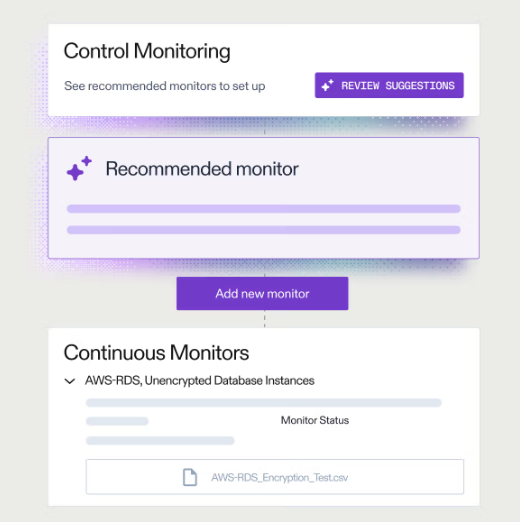
Most tools will facilitate evidence collection, but then stop there, requiring user intervention to sift through the various evidence collected. The right tool will flag any issues as they occur, like configuration drift, surface exceptions as they happen, and route remediation tasks to the right owners. This will help your team maintain an audit-ready status without manual effort.
Your ISO 27001 software should connect to the systems your teams already use because control data changes every day. Access rights, configurations, tickets, and incidents all shift in real time. If your software can’t pull that information in automatically, you end up checking each system manually and updating compliance records by hand.
Look for tools that integrate with your:
When these systems share data automatically, your compliance posture reflects what’s happening in real time. You reduce duplicated effort and support continuous, scalable ISO 27001 compliance.
Optro supports ISO 27001 programs by bringing controls, evidence, risk activities, and audit workflows into a single platform.
This means compliance leaders get one streamlined environment to manage day-to-day work, maintain alignment across teams, and demonstrate ongoing security maturity to stakeholders and auditors.
Here’s how Optro’s compliance tools work.
Optro brings all of your ISO 27001 work into one place — the controls, the policies behind them, the risks they address, and the evidence that proves they work. Instead of scattered folders and half-finished trackers, Optro gives your program a clear home with the option to separate data by programs or business units if needed.
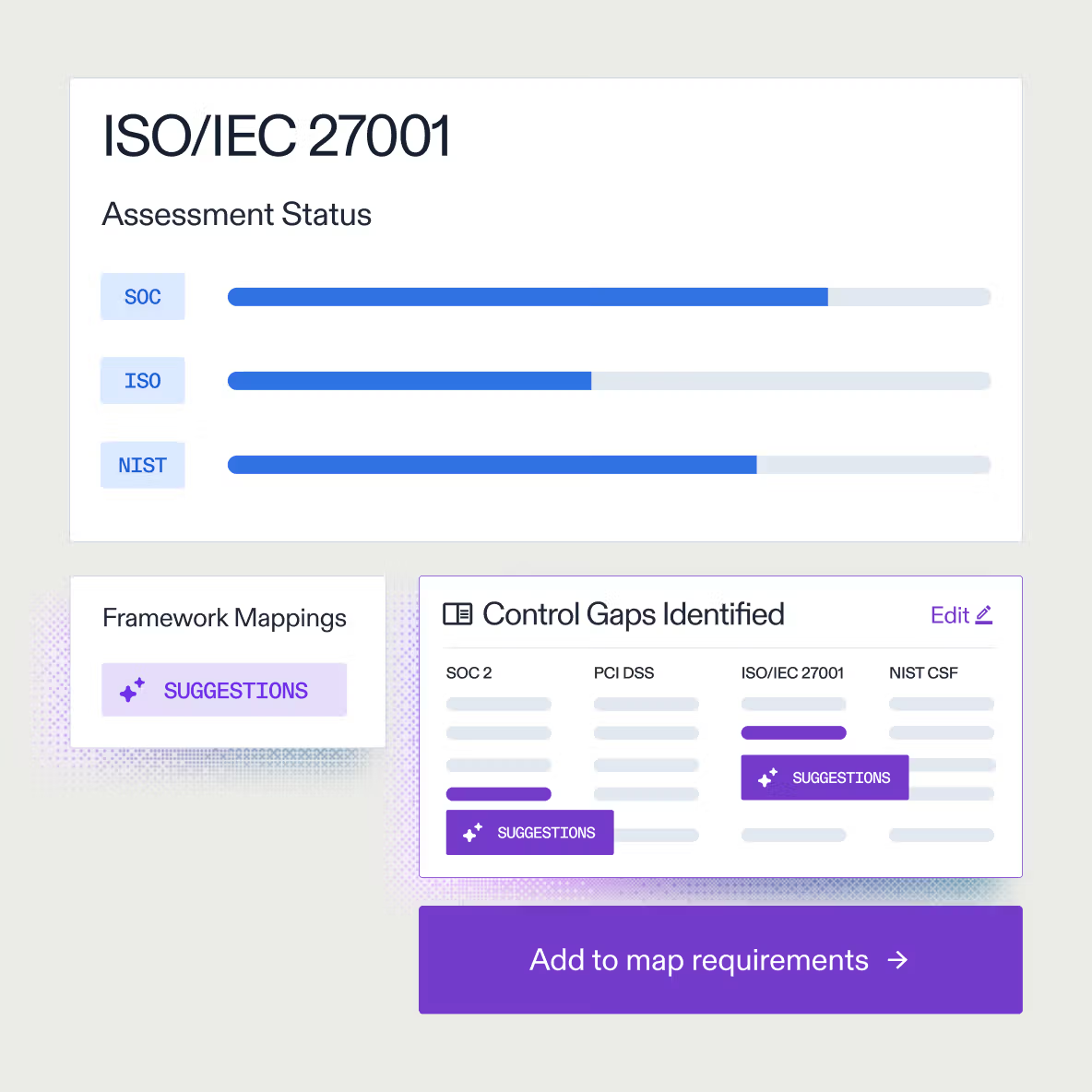
And because everything sits in one system, you can map controls across multiple frameworks, such as SOC 2, NIST CSF, and CIS controls, without recreating versions of the same work for each standard. This allows you to collect evidence and perform testing once and cascade those results across related requirements. The effort goes into strengthening the control, not duplicating documentation.
On top of this, customizable dashboards show what’s actually happening across the program. You see which controls have solid evidence, which ones need attention, and who owns the next step. It becomes easier to direct energy where it matters, instead of chasing updates or piecing together status from email threads.
Optro takes the repetitive burden out of evidence collection. Each control has a clear owner, a timeline, and a defined set of proof tied to it. The platform prompts the right people when evidence is due and walks them through what to provide, so no one has to guess or dig through old folders.
And since Optro connects to systems like asset inventories, HR platforms, and configuration tools, the evidence reflects what’s actually happening in the environment. It’s not a snapshot from months ago. Additionally, for any control or requirement without existing evidence, AI-powered suggestions will surface relevant available evidence that may satisfy it — removing the manual burden of creating duplicate requests.
The result is steady, year-round readiness instead of a last-minute panic.
Most compliance programs still rely on point-in-time testing: a control gets checked, a box gets ticked, and no one looks again until the next cycle. Optro's Continuous Control Monitoring (CCM) changes that.
With pre-built templates for critical areas like cloud security, endpoint management, and backup configurations, teams can automate control testing without building anything from scratch. Select a template, configure your schedules, thresholds, and notification preferences, and the monitoring runs itself.
Here's what that looks like in practice:
The result is a program that doesn't just report on compliance — it actively maintains it, closing the gap between audit cycles and keeping your security posture strong year-round.
ISO 27001 doesn’t live on its own, and Optro doesn’t treat it that way.
Risk assessments, control testing, and audit activities all tie into a connected risk core in Optro. So if something changes, the change is reflected across the entire platform for teams to see.
Here’s what that looks like in action:
Because the system updates as the work happens, the program doesn’t stall between audits or rely on end-of-cycle catch-up. It moves forward continuously, in small, visible steps that actually strengthen security over time.
Beyond Optro, several platforms support ISO 27001 compliance at varying scales of automation, integration, and guidance. Each offers strengths that suit different stages of maturity, from fast-moving SaaS startups to enterprise GRC teams.
Here’s how five leading options compare.
Scytale is an automation-first compliance platform that uses AI to manage frameworks like ISO 27001, SOC 2, and GDPR from one centralized system. It automates evidence collection, policy management, and risk reviews through an intelligent GRC agent that learns from user input.
Best fit: Organizations operating in digital environments that need to streamline multi-framework compliance while maintaining control over daily security operations
Key features:
Trade-offs:
Sprinto delivers continuous compliance automation through direct integrations with cloud and IT infrastructure. The platform monitors configurations, maps risks to controls, and automatically assigns remediation tasks to maintain ongoing audit readiness.
Best fit: Businesses that rely on cloud environments and want to automate ISO 27001 and related standards
Key features:
Trade-offs:
StandardFusion provides an integrated GRC platform that connects audit, risk, and compliance functions. Its modular design supports ISO 27001 and frameworks such as NIST and SOC 2, offering configurable risk models, dashboards, and AI-assisted documentation.
Best fit: Mid-to-large enterprises in regulated industries that require configurable, audit-ready workflows across multiple standards
Key features:
Trade-offs:
Vanta automates security compliance across a range of SaaS and cloud tools. The platform continuously gathers evidence, validates configurations, and maps controls across frameworks to maintain real-time audit readiness.
Best fit: Fast-scaling organizations balancing rapid growth with strong security governance
Key features
Trade-offs:
ISMS.online (IO) handles ISO 27001 compliance through a structured ISMS workspace that includes prebuilt templates, linked evidence libraries, and guided workflows. It focuses on being an easy-to-use tool that helps teams build and maintain certification-ready programs.
Best fit: Established companies formalizing their ISMS for the first time or expanding ISO 27001 compliance alongside related frameworks
Key features:
Trade-offs:
Now that you’ve seen what the leading ISO 27001 software options offer, you need to compare them systematically.
Here’s how you carry out a structured evaluation to see which tool truly fits your compliance goals, integration needs, and growth plans.
Build a simple feature table to organize what matters most to your team. Split features into essential and advanced categories.
Use this comparison to identify which tools support long-term scalability rather than one-time audit readiness.
Lower-cost tools can be useful for quick certification or single-framework compliance. They usually offer fast onboarding, but can limit customization and multi-framework expansion.
As your ISMS grows, you’ll need more advanced features, like scalable automation, broader integration, and enterprise-grade reporting. Enterprise-grade systems offer this depth, but they’re more expensive. However, they scale better across departments and frameworks, reducing long-term administrative costs.
Weigh vendor maturity and the quality of the tool’s customer service ecosystem. Mature vendors typically offer more structured onboarding, 24/7 support, and regular updates that keep pace with changing regulations.
An ISO 27001 tool delivers the most value when it feeds into your enterprise-wide risk view rather than operating in isolation. Integrated systems turn compliance data into risk intelligence, helping you shift from ticking boxes to proactively managing risk.
Here’s how you make your ISO 27001 compliance software part of a broader, connected risk program.
Export control health, risk scores, and audit findings into enterprise risk management (ERM) dashboards. This gives leadership a single, data-driven view of security posture alongside financial and operational risks.
Extend ISO 27001 data across audit and third-party risk programs. Linking controls to vendor assessments or audit testing reduces duplication and strengthens accountability across teams.
Bring compliance data from different frameworks into one governed system, where you clearly define ownership and access. Use shared taxonomies for risks and controls so teams across audit, IT, and security work from the same definitions and evidence sources. This consistency prevents duplicate records, reduces reporting errors, and keeps every framework in line with a single source of truth.
ISO 27001 compliance is now the backbone of modern cybersecurity, data security, and business continuity. The right platform turns complex ISO 27001 requirements into a living program that continuously manages security controls, tracks vulnerabilities, and aligns with your broader security frameworks.
Whether you’re optimizing your compliance management process, refining internal audits, or scaling ISO 27001 implementation, the right technology transforms your compliance tasks into proactive defense against real-world security risks.
Optro brings these capabilities together, automating evidence collection, mapping controls across frameworks, and giving you real-time visibility into every compliance requirement.
Book a demo to see how Optro can serve as your ISO 27001 engine across risk, compliance, and audit.

Elli Sullivan is a Senior Product Marketing Manager at Optro, driving strategic market execution, with nearly a decade of experience in IT audit, risk, and compliance. Her career is grounded in security and compliance from her time at KPMG as part of the IT Advisory team, focused on evaluating IT controls and risks. She transitioned into the GRC technology space, where she served as a subject matter expert, developing platform content and resources aligned to best practices across various company sizes and industries, while driving content and strategy initiatives in partnership with product, customer success, and marketing teams. Her multidisciplinary background across IT audit, GRC, and product marketing enables her to help organizations understand and adopt technology solutions that strengthen their GRC programs.