





Compliance
CPE Week | Join us for our second annual CPE Feast, November 30 to December 3 | Register here about this announcement
November 20, 2026 • 13 min read
An acquisition closes carrying PCI obligations your control library has never seen, a new market brings a regulator with its own expectations, and the same access-review evidence gets requested three times in one quarter.
The question at that point is rarely whether to consolidate controls, but how to build a common control framework mapping that stays accurate through the next framework revision.
The method is the same whichever system holds the mapping: choose a spine framework, normalize the control language, record partial coverage, and revalidate when frameworks change.
Common control framework mapping is the practice of writing a control once, testing it once, and linking it to every framework requirement it satisfies. One access-review control then produces evidence for SOC 2, ISO 27001, PCI, and NIST at the same time.
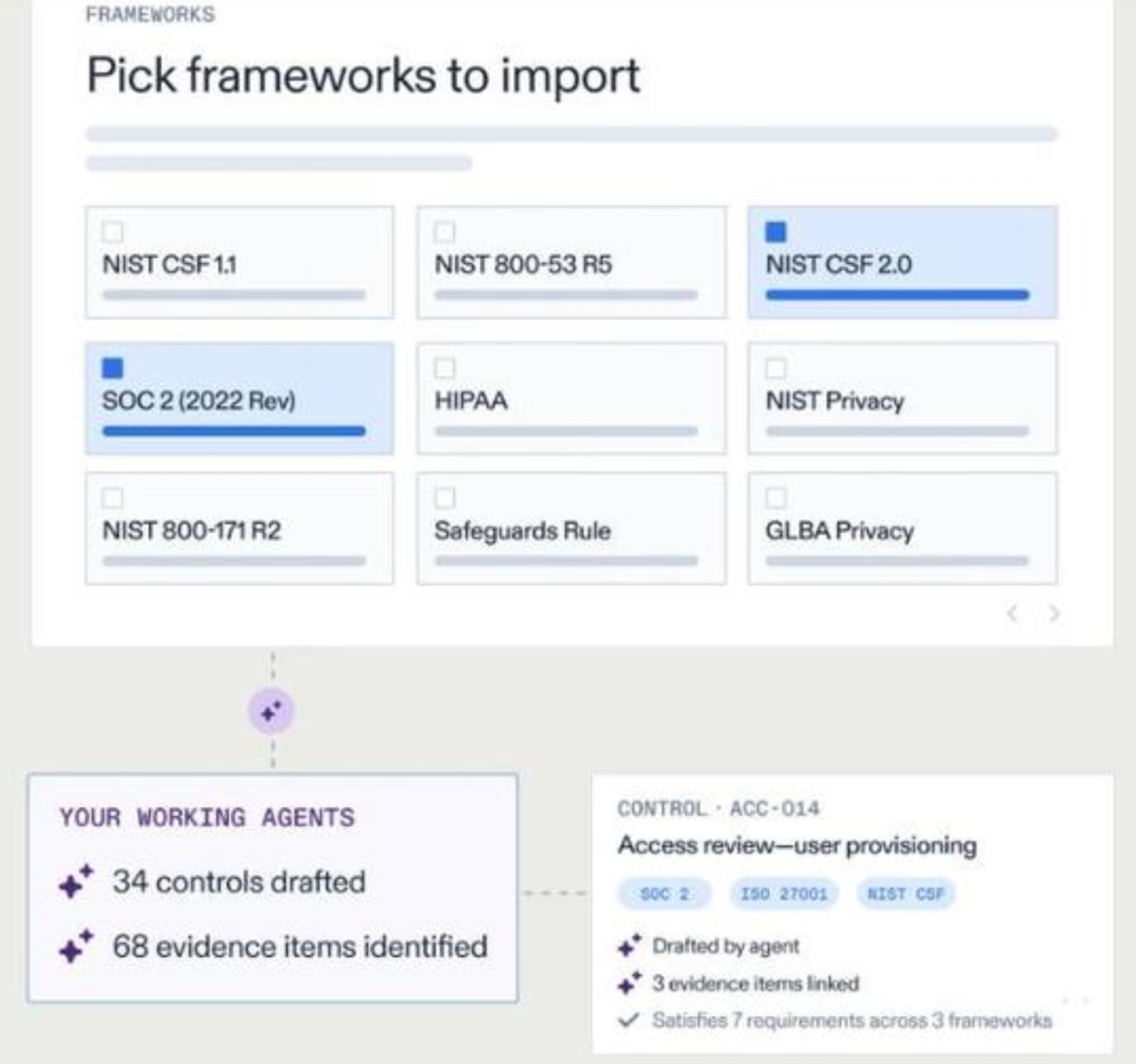
Mapping establishes relationships between an internal control and external requirements. Consolidation is what the mapping lets you do afterward: retire duplicate controls, collapse overlapping test procedures, and maintain one policy instead of four.
The model runs on three relationship types: one control satisfying many requirements, several controls jointly satisfying one requirement, and partial satisfaction, where a control covers some of a requirement and not the rest.
A common control set is not a lowest-common-denominator control written loosely enough to touch every framework. A control written that way is too weak to pass any of the audits it was meant to cover.
Published guidance on control mapping often presents a vendor-built comparison table as though it carried the same weight as the standard. The stronger starting point is a crosswalk published by the body that owns the criteria, because that body defines what its own requirements mean. Three sources cover most of the ground.
AICPA & CIMA publishes two mappings from its own Trust Services Criteria. Mapping: 2017 Trust Services Criteria to ISO 27001, dated May 4, 2018 and including March 2020 updates, covers the Security, Availability, Processing Integrity, Confidentiality, and Privacy categories.
Mapping: 2017 Trust Services Criteria to NIST 800-53, dated January 22, 2020, compares NIST 800-53 to the criteria with revised points of focus.
Working through either mapping shows the actual overlap between the two standards, rather than an overlap percentage whose methodology is never stated.
The Secure Controls Framework, published by the Secure Controls Framework Council, LLC, is free under Creative Commons Attribution-NoDerivatives 4.0 International. The 2026.2 release carries 1,500-plus controls across 34 domains, mapped to 200-plus laws, regulations, and frameworks.
For baselines, NIST SP 800-53B gives three security control baselines, one for each system impact level, plus a privacy baseline applied to systems irrespective of impact level, with tailoring guidance to inform selection.
The Secure Controls Framework catalog is available as NIST OSCAL JSON as well as a spreadsheet. OSCAL is a machine-readable format for expressing catalogues and mappings, so a mapping built once can be imported into another system instead of being rekeyed.
As stated earlier, three decisions do most of the work here:
Pick one authoritative source as the organizing structure, usually the most prescriptive framework in scope or the one carrying the heaviest assurance requirement, then express every other framework as a relationship to it.
A prescriptive spine such as NIST 800-53 gives granularity, while a risk-based spine such as ISO 27001 gives flexibility, and the choice shapes every relationship built on top of it.
The same control appears in four frameworks under four verbs at four levels of specificity. Write one internal control statement in the organization's own language, then attach framework references to it. Mapping framework text directly to framework text produces a crosswalk nobody can operate.
Relationship direction comes next. One control satisfying several requirements is the common case. Several controls jointly satisfying one requirement is the harder case, because the mapping looks complete while no single control covers the requirement on its own.
Flag those relationships as joint at the point they are created, so a later reviewer can see the requirement depends on all of them operating.
Where one framework's control half covers another's, record it as partial, note what is missing, and track the gap as work with an owner. Marking a partial match as full is how a mapping passes internal review and fails an audit.
Tracking those gaps alongside the mapping is what a spreadsheet handles badly. CrossComply, the compliance module from Optro (formerly AuditBoard), covers gap assessment, control mapping, and evidence collection together. For teams scoping this alongside a SOC 2 program, our guide to SOC 2 compliance software covers the product comparison.
Frameworks revise, and crosswalks lag behind the revision. A mapping that was accurate at certification becomes wrong without anyone touching it, and nobody notices until an auditor tests against the current release and finds control references pointing at retired criteria.
Stamp every mapping relationship with the framework release it was built against, and subscribe to revision notices from each standard-setter in scope.
Revalidate on a fixed cadence and on every framework release, whichever comes first. A published crosswalk carries its own date, so record that date alongside the framework release rather than treating the two as one fact.
Change of business matters as much as change of framework: an acquisition introduces obligations the mapping has never seen, a new market adds a jurisdiction, and a new product line changes which systems sit inside scope.
Each of these forces a pass over the library, and each is predictable enough to plan for. Running those passes by hand across a spreadsheet library is where the effort becomes unmanageable, which is the point at which teams look at compliance automation tools.
A revalidation confirms four things: the referenced control still exists in the new release, its intent has not shifted, the existing evidence still satisfies the revised testing requirement, and no new requirement has appeared with no control behind it.
The last check is the easiest to miss because a revision that adds a requirement leaves no broken reference behind, so nothing signals the omission until someone tests for it.
Three limits constrain what a common control mapping can claim, and an internal audit director will look for all three.
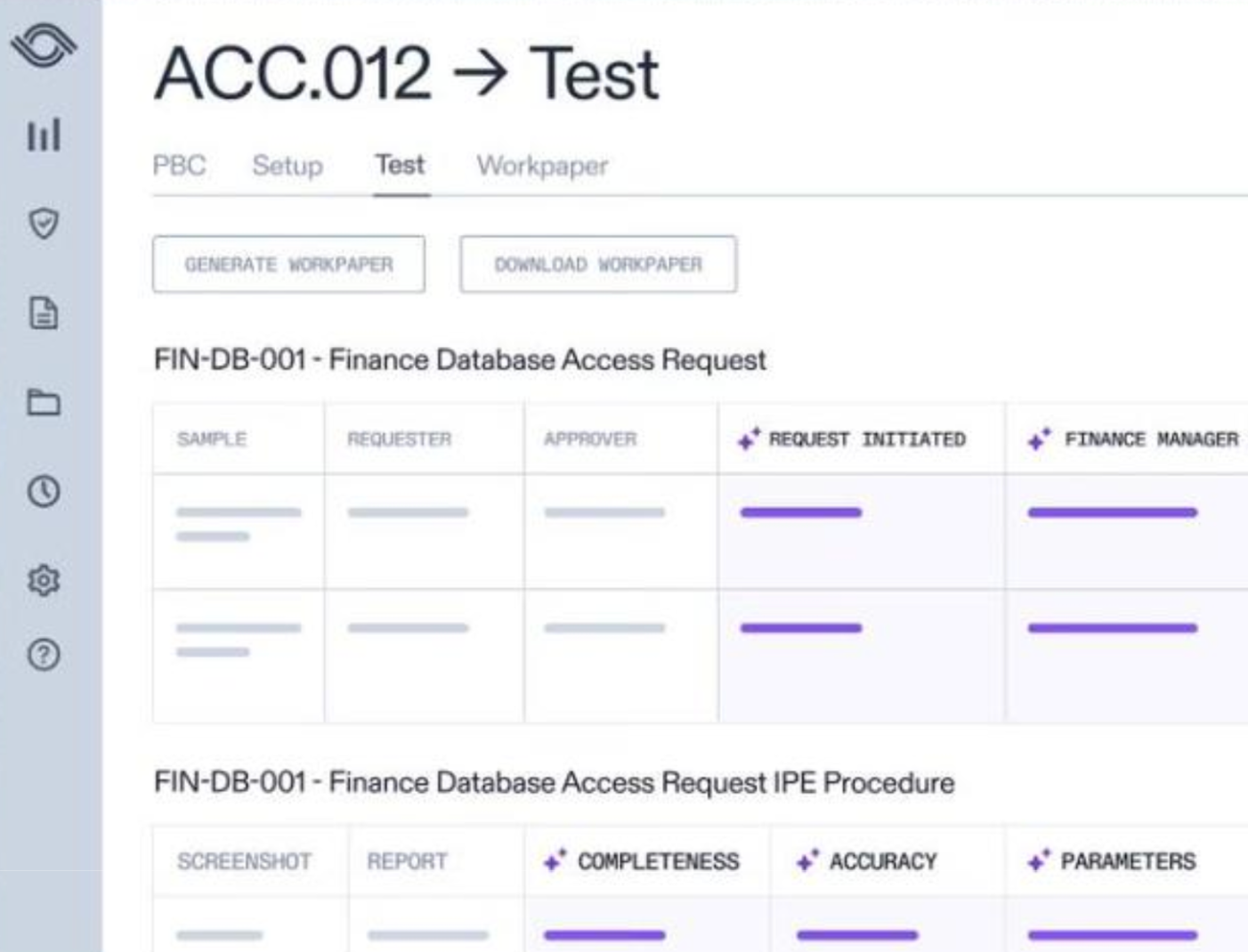
Two frameworks can require the same control and still require different proof. One accepts a point-in-time artifact; the other requires evidence across an observation period. A mapping that treats the control as shared and the evidence as interchangeable will pass the first audit and fail the second.
Record the evidence requirement against each framework reference, not against the control. That is how a reviewer can tell whether one artifact covers all of them, or whether only the control is shared.
Two controls can read almost identically and sit at different levels of rigor. A documented policy is not a tested, monitored, independently reviewed operating control. The mapping should record which level each framework expects.
Some requirements exist in one framework and nowhere else, so they get their own control. That is the correct outcome rather than a sign the mapping is incomplete.
Scope boundaries behave similarly. The same control can be in scope for one framework's system boundary and out of scope for another's, so map the control and the boundary together or the mapping overstates coverage.
Recording what does not map matters as much as recording what does, and keeping exclusions visible alongside controls and framework references is hard to sustain in a spreadsheet. Optro's GRC Intelligence Platform holds all three as connected records.
Useful indicators describe the health of the library rather than its size:
None of these figures change abruptly, so they are worth reviewing on the same cadence as the mapping itself. Keeping controls, evidence, and framework references in a single source of truth is what makes them readable without a manual reconciliation.
Managing four frameworks across spreadsheets only one person can open?
Optro keeps controls, evidence, and framework references as connected records in one place, so one control activity stays audit-ready across every requirement it satisfies.