


Regulatory Compliance
CRX | GRC Intelligence and Agentic AI across audit, risk, and compliance | Read more
April 24, 2026 • 20 min read

Elli Sullivan
Legacy compliance tools slow security, financial reporting, and regulatory programs to a crawl. Chasing evidence through emails, wrestling with outdated spreadsheets, managing one-off manual workflows — all these outdated processes make it nearly impossible to keep pace with regulatory changes or support a growing compliance program.
As new standards emerge and existing compliance requirements evolve, teams need systems that overcome these challenges. They need tools that cut manual effort, surface real-time insights, and connect compliance with risk and audit.
A modern regulatory compliance solution does exactly that. These tools streamline control mapping, automate evidence collection, and bring work into one place so teams can stay audit-ready instead of scrambling.
Here’s a breakdown of the top regulatory compliance tools and what to look for when choosing a solution that fits your organization.
Regulatory compliance tools are software solutions that help organizations manage, monitor, and maintain compliance with the growing list of regulatory requirements they face. They centralize compliance activities, automate repeatable tasks, and give teams real-time visibility into their controls, risks, and audit readiness.
The best regulatory compliance tools support the daily work behind your compliance program.
This includes:
Together, these functions streamline compliance processes, reduce human error, and help organizations maintain a consistent, audit-ready posture across evolving regulatory requirements.
Modern compliance management software should support a wide range of frameworks and industry-specific standards, including:
Supporting multiple frameworks matters because most organizations don’t operate under just one set of rules. You need a compliance tool that adapts to all relevant new regulations and risks that emerge.
There’s a difference between a compliance tool and a compliance platform.
Teams building long-term, resilient compliance programs benefit most from platforms that adapt as their organizations evolve.
Legacy tools create friction that slows work down, increases non-compliance risks, and makes it harder to stay ahead of regulatory changes.
Here’s how strong tools solve these challenges and improve operational efficiency.
Chasing screenshots, digging through email threads, and sorting through duplicate files drags compliance tasks out far longer than necessary. Manual evidence collection can also create version control problems that leave teams guessing which file is the “right” one.
Compliance tools remove the guesswork. Automated evidence requests, clear ownership, and audit trails keep documentation clean, consistent, and audit-ready.
According to Regology’s 2025 State of Regulatory Compliance Survey Report, 29.4% of compliance teams say their biggest challenge is operating in silos.
This is because fragmented systems create duplicate work and inconsistent processes. When compliance controls live in different places, teams repeat testing, lose context, and struggle to track remediation.
Modern compliance platforms pull frameworks into one connected system, map common controls, and reduce redundant control testing. This gives you one unified overview without the duplicated effort that makes compliance hard to scale.
Most teams struggle to see where things stand at any given moment. They find it hard to see what’s overdue, what’s at risk, and what’s ready for audit. Regology also reports that the single biggest challenge compliance teams face is keeping up with regulatory changes. This compounds visibility issues because teams can’t see quickly enough what needs updating or where new gaps appear.
Compliance tools solve this with real-time dashboards, automated notifications, and clear reporting that shows exactly where to focus your attention.
As organizations grow, the cracks in distributed, manual processes widen, making it hard to scale. NAVEX’s 2025 State of Risk and Compliance Report shows that 73% of mature programs centralize investigations. These centralized teams often operate effectively with just one to five investigators. Meanwhile, the report shows that decentralized teams are far more likely to require 30 or more.
This shows the value of centralized, technology-supported programs. They scale well because work lives in one place, which means teams can manage more with fewer people. Compliance platforms do this by centralizing visibility, standardizing workflows, reducing manual lift, and automating processes. That way, teams can scale with fewer resources.
The right tool should reduce manual compliance efforts, improve visibility, and keep your compliance program in line with fast-moving regulatory requirements.
Here are the core features that make that possible:
Here are six of the top regulatory compliance tools available today, with a breakdown of their strengths and weaknesses.
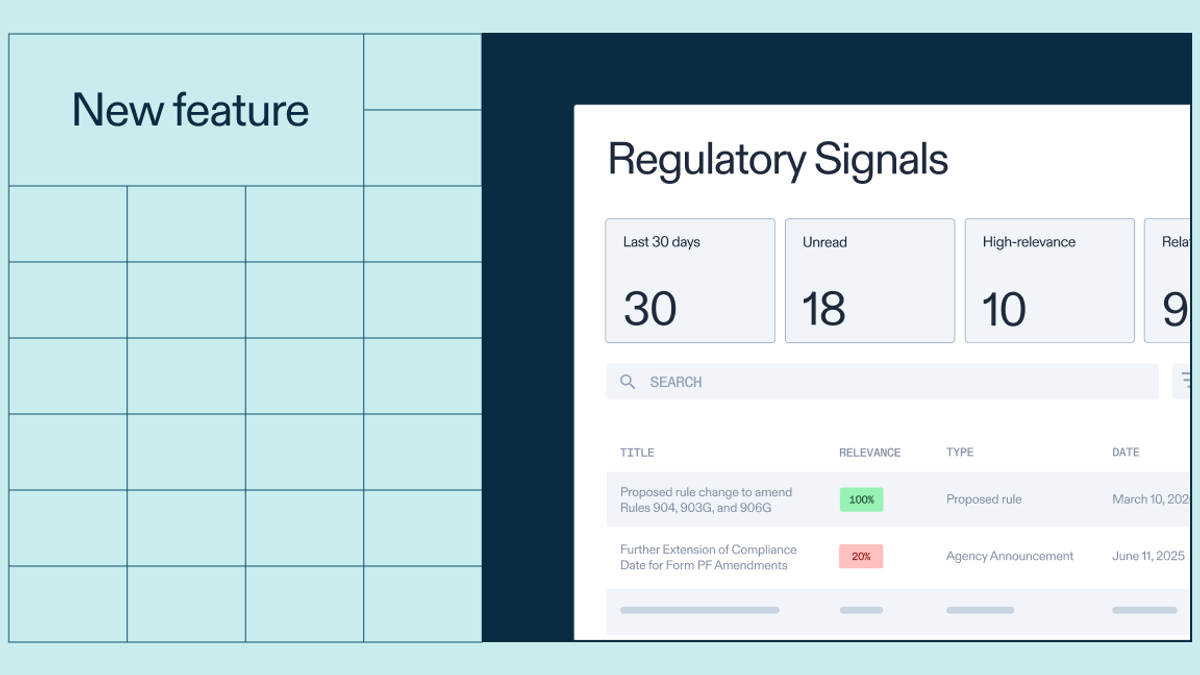
Optro provides an AI-powered, modern approach to regulatory compliance management, centralizing structured regulatory intelligence and automating the end-to-end change management lifecycle.
It eliminates the manual burden of tracking regulatory updates by providing real-time alerts and intelligent mapping to your existing GRC ecosystem, ensuring your program remains agile and audit-ready.
Best for: Local and regional banks or mid-sized insurance companies operating in the U.S. that need to centralize federal and state regulations, automate change tracking, and strengthen alignment between compliance, risk, and internal audit teams.
Strengths:
LogicGate uses a visual workflow builder that allows teams to design, automate, and adapt compliance processes as requirements change.
Its no-code builder lets teams shape workflows around their actual business processes instead of forcing everything into rigid templates.
Best for: Mid-market and enterprise teams that need flexibility to design compliance workflows around their own processes. LogicGate works well for organizations with the internal resources to configure and evolve workflows as requirements change.
Strengths:
Vanta provides fast, automated security compliance for growing startups that need SOC 2 or ISO 27001 certification to meet customer or investor demands.
Its automated system checks reduce the busywork of manual evidence collection, helping small teams stay compliant as they grow.
Best for: Startups and cloud-native teams pursuing first-time security certifications like SOC 2 or ISO 27001, particularly when speed to audit readiness is more important than deep risk or audit integration.
Strengths:
Drata automates security compliance with continuous control monitoring, real-time alerts, and integrations that keep systems audit-ready without manual effort.
It gives teams real-time insight into control health, flagging issues the moment they appear, so problems don’t pile up before audits.
Best for: Small teams that want fast, automated security compliance with minimal manual effort. Drata fits organizations focused primarily on maintaining audit readiness for security frameworks rather than managing broader compliance or risk programs.
Strengths:
Hyperproof centralizes controls, evidence, and tasks, making it easier to manage compliance work across multiple standards.
Its structured workspace organizes testing, evidence, and remediation, making complex multi-framework work feel more repeatable and predictable.
Best for: Teams moving off spreadsheets that need structure for managing multiple frameworks, evidence, and testing, but don’t yet require a fully unified GRC platform.
Strengths:
OneTrust gives enterprises a broad suite for privacy compliance, data governance, and ESG reporting, with strong tools for managing GDPR and complex data obligations.
Its extensive libraries and data-mapping capabilities help organizations understand exactly what data they hold, where it lives, and how it’s governed.
Best for: Large enterprises with complex privacy, data governance, and ESG obligations. OneTrust is typically adopted where GDPR, data mapping, and privacy program management are the primary compliance drivers.
Strengths:
Optro unifies compliance, risk, and audit work in one platform, replacing the friction of spreadsheets and disconnected tools with a system built for visibility, automation, and scale.
Optro pulls your entire compliance universe — SOC 2, SOX, ISO 27001, NIST, HIPAA, and internal policies — into one unified platform. Controls connect across frameworks automatically, risks tie directly to what mitigates them, and audit teams work from the same source of truth.
The result? Cleaner workflows, fewer repeats, and a compliance program that stays aligned as regulations change.
Optro takes the manual work out of evidence collection by automating every step:
This cuts out human error, speeds up audit cycles, and keeps teams consistently audit-ready.
Optro’s dashboards give compliance officers real-time visibility into gaps, overdue tasks, testing results, remediation status, and framework readiness. This supports faster decision-making, clearer reporting to executives, and more proactive compliance monitoring across the business.
With Optro, you define a control once and deploy it across all frameworks. Optro maps controls across frameworks automatically, reducing redundant testing and keeping documentation consistent. As new frameworks or regulatory requirements emerge, teams can scale without adding headcount or rebuilding workflows from scratch.
Modern compliance teams are increasingly moving away from the "siloed" era of manual spreadsheets and reactive tracking. To stay ahead of an evolving landscape, today’s leaders require an integrated, AI-driven approach to regulatory change management.
Optro RegComply is purpose-built to meet these demands by centralizing intelligence and automating critical workflows.
The foundation of a modern program is a single source of truth. RegComply provides out-of-the-box (OOTB) content sourced from CUBE, covering over 9,000 issuing bodies globally.
Traditional change management is often a manual "last-minute scramble". RegComply leverages Optro AI to transform these reactive processes into proactive workflows.
Compliance does not exist in a vacuum. A modern program must be integrated with the broader business to drive risk-based decisions.
With RegComply, you move from manual spreadsheets to an AI-powered engine that saves your team 20% to 40% of their time while ensuring you have a 360-degree view of your regulatory posture.

Elli Sullivan is a Senior Product Marketing Manager at Optro, driving strategic market execution, with nearly a decade of experience in IT audit, risk, and compliance. Her career is grounded in security and compliance from her time at KPMG as part of the IT Advisory team, focused on evaluating IT controls and risks. She transitioned into the GRC technology space, where she served as a subject matter expert, developing platform content and resources aligned to best practices across various company sizes and industries, while driving content and strategy initiatives in partnership with product, customer success, and marketing teams. Her multidisciplinary background across IT audit, GRC, and product marketing enables her to help organizations understand and adopt technology solutions that strengthen their GRC programs.