
AI
CPE Week | Join us for our second annual CPE Feast, November 30 to December 3 | Register here about this announcement
November 17, 2026 • 16 min read
AI governance becomes more challenging as organizations adopt AI across different departments and systems. Some tools are developed internally, others come through third-party software, and employees may use AI applications without formal approval.
ISO/IEC 42001 provides a framework for establishing and maintaining an AI management system, helping you to manage AI risks and demonstrate responsible oversight. Certification is voluntary, but implementing the standard can also help you prepare for evolving regulatory requirements.
This guide walks through the key steps of ISO 42001 implementation, from defining the scope and assessing risks to establishing controls, collecting evidence, and preparing for certification.
AI arriving through vendors, employees, and your own data science teams, with no inventory covering all three?
Optro builds a living inventory of every model, agent, and system, so AI risk decisions sit on the same connected data as the rest of your risk program.
Becoming ISO 42001 certified means adopting a management system. ISO/IEC 42001:2023, published 18 December 2023, specifies the requirements and provides guidance for establishing one.
According to ISO's guidance, the standard covers several key areas, including leadership, AI policies and objectives, risk and data management, and AI system lifecycle controls. It also addresses transparency, performance monitoring, and continual improvement.
An AI management system follows a Plan-Do-Check-Act (PDCA) cycle. Organizations establish policies and objectives, assess AI risks, implement controls, monitor performance, and use the results to continuously improve their processes.
Annex A of ISO 42001 provides additional guidance on AI controls, with the full details available in the standard.
Your information security program governs confidentiality, integrity, and availability. ISO 42001 governs the decisions an AI system makes and the harm those decisions can cause. The clause structure is familiar enough to reuse your governance machinery, but the risk objects are different.
ISO/IEC 42001 certification is voluntary and conducted by independent certification bodies, not ISO itself. Organizations can pursue certification at any time, regardless of upcoming regulatory deadlines.
The Digital Omnibus entered into force on July 27, 2026, extending the application dates for high-risk AI systems. Per the European Commission's AI Act FAQ, the rules for high-risk AI systems apply starting December 2, 2027, and rules on AI embedded in physical products apply starting August 2, 2028.
Regardless of regulatory deadlines, organizations still need effective AI governance. Implementing ISO 42001 helps establish the processes, responsibilities, and documentation needed to manage AI risks and demonstrate compliance with applicable requirements.
Defining the scope is one of the most important steps in ISO 42001 implementation.
A scope that's too broad can make the process unnecessarily complex, while one that's too narrow may exclude important AI systems and risks. Start by identifying which business units, AI systems, and processes your AI management system needs to cover.
Four questions set the boundary: which business units, which AI systems, which third-party and embedded AI, and which geographies. Most organizations scope first to the units where AI materially affects decisions about people, money, or safety, then widen in a later cycle.
Document the scope of your AI management system, including any exclusions and the reasons behind them. Auditors will review these exclusions to determine whether the scope is appropriate.
Start by identifying where AI is used across your organization, including:
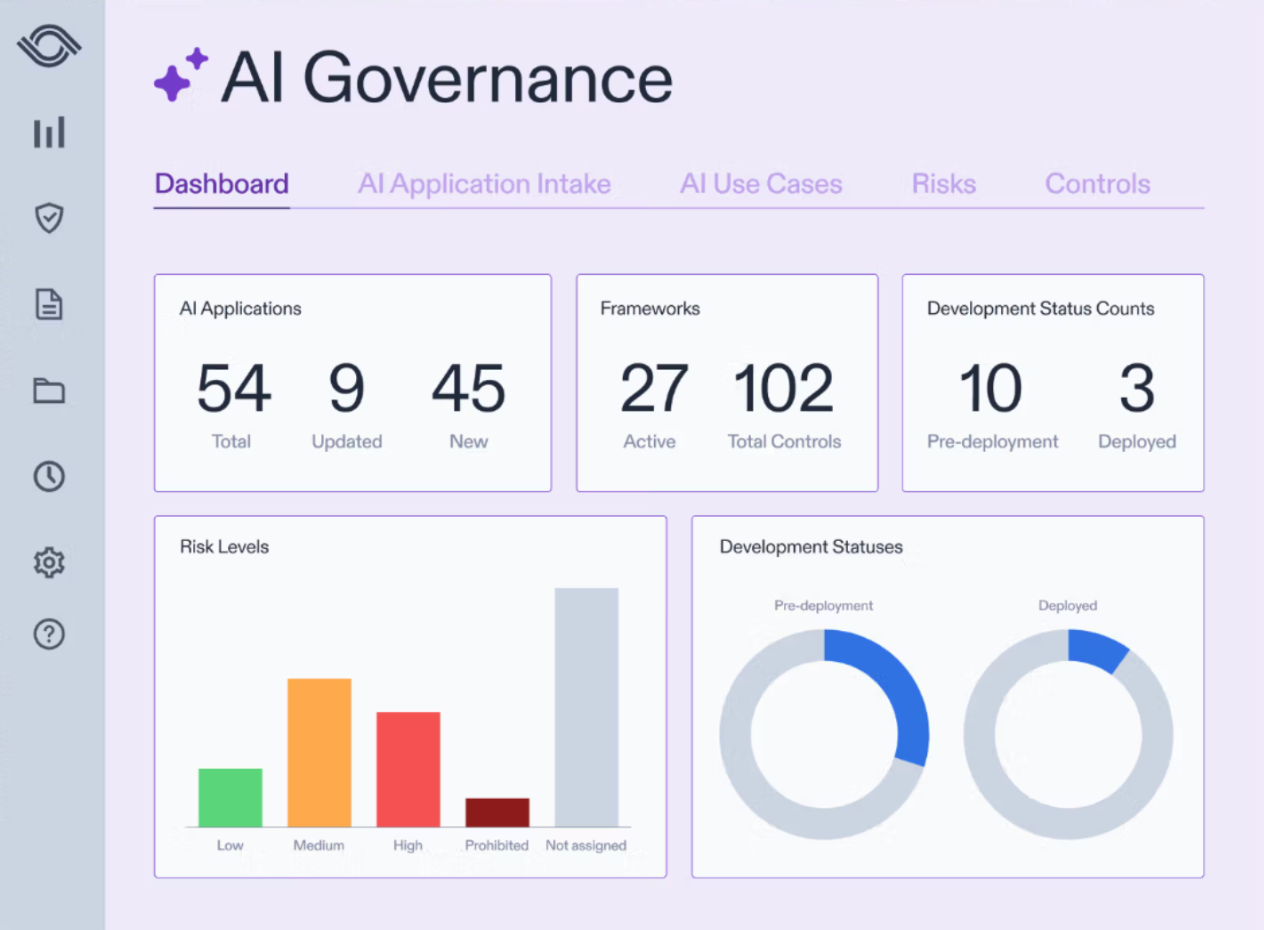
Optro (formerly AuditBoard) runs its AI governance module to centralize every model, agent, and third-party app from initial intake to live production, and surfaces unauthorized AI before it creates compliance or security gaps. Ungoverned AI you cannot see cannot be scoped, assessed, or certified.
Senior leadership must approve the AI policy, allocate resources, and oversee management reviews.
Organizations should also assign clear responsibilities for AI oversight, including who reviews new AI applications, approves higher-risk use cases, and has the authority to stop a deployment.
Follow these five steps to establish an AI management system, from assessing your current practices to implementing controls and managing third-party AI risks.
Compare current practice against each requirement area and record the delta. The artifact is a gap register with an owner and a target date against every line. Governance of internal builds is often further along than governance of vendor AI.
ISO's starting actions include writing down policies for AI use and data governance. The policy states what AI may and may not be used for, who approves exceptions, and what the organization commits to on transparency. Objectives make the policy measurable.
AI risk assessments help organizations identify and evaluate potential risks, while impact assessments examine how AI systems may affect individuals and groups.
Both require a consistent methodology, clear evaluation criteria, and documented results. Establishing an AI risk management framework can help guide these assessments.
Establish controls for training data provenance, quality, and retention, along with approval checkpoints throughout the AI system lifecycle. Document each stage, including the required approvals and who is responsible for them.
Add AI-specific questions to vendor due diligence, such as what the model does, what data it consumes, and what governance the vendor operates.
If you already run the NIST AI Risk Management Framework, this guide to integrating NIST AI RMF and ISO 42001 covers how the two fit together.
To achieve ISO 42001 certification, organizations must demonstrate their AI management system is implemented and operating effectively, not just documented in policies.
Auditors may request several types of evidence, including risk assessments, training records, and logs of AI system approvals. They may also review performance monitoring reports and records of corrective actions. ISO's guidance also emphasizes the importance of monitoring AI performance, addressing issues, and continuously improving governance processes.
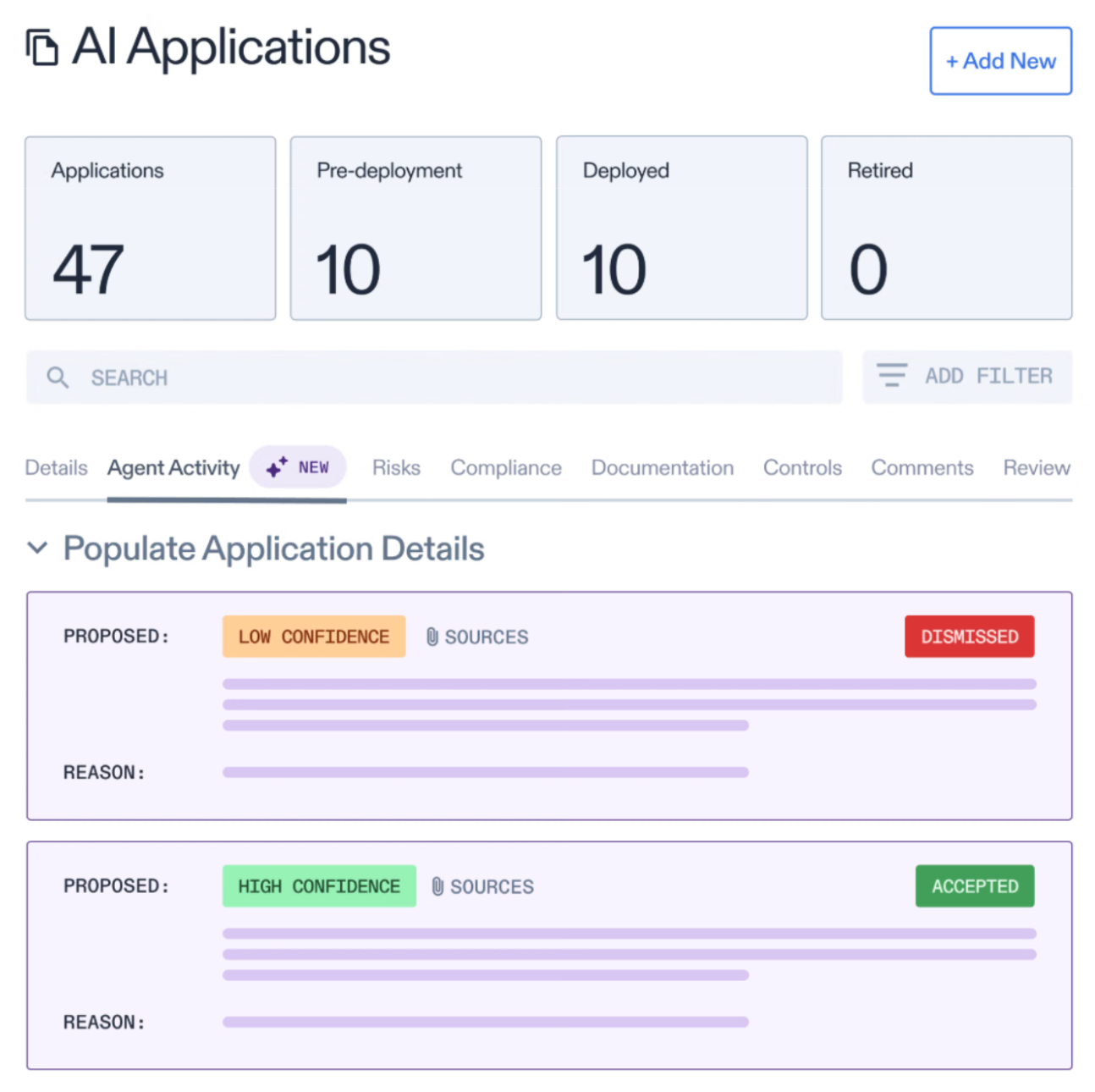
Optro gives risk and compliance owners one place where that evidence lives, with automated risk score recommendations based on your AI system inputs, which your team reviews before a score is set.
An internal audit assesses whether the AI management system operates as intended. Auditors must remain independent of the activities they review to ensure an objective assessment.
Qualified internal auditors or external professionals can conduct the audit, provided they are independent of the activities being reviewed. Any findings should lead to documented corrective actions, with assigned owners and deadlines.
Management review is a recurring leadership obligation rather than an annual formality. Leadership reviews progress toward AI objectives, the status of corrective actions, changes in AI risks, and whether the scope of the management system remains appropriate.
Document any decisions made during the management review, including changes to resources, scope, or policies.
ISO states that certification is voluntary and that it does not issue certificates itself. Independent certification bodies carry out the assessment, and each body sets the detail of how it runs one.
You select a certification body. It assesses your AI management system, and it issues the certificate. Any staged process a body runs — a documentation review ahead of a fuller assessment, for example — belongs to that body and is set out in its own methodology, not in the standard.
Ask for that methodology in writing before you sign.
Look for a certification body accredited by a recognized national accreditation body, as accreditation can strengthen the credibility of your certification with customers and other stakeholders.
After that, ask about auditor experience with AI systems specifically, not management systems generally. Be clear about the scope, as a mismatch between the scope you wrote and the one they assess can surface late and be expensive.
Assemble the scope statement, the AI policy and objectives, the inventory, risk and impact assessment records, the lifecycle and its approval gates, internal audit reports, and management review minutes.
Auditors will also ask to speak to people. The accountable executive, AI system owners, a data science representative, and someone from procurement should all be available for an interview.
Nonconformities are normal, so treat each one as a corrective action with a root cause and a date rather than as an argument to win. A disciplined response rarely derails a timeline, and it gives the auditor something the standard asks you to evidence anyway, in terms of a corrective action process that works.
Security and compliance own the management system, legal owns regulatory interpretation and transparency commitments, data science owns model-level evidence, and procurement owns the vendor AI questions.
Organizations can bring in external consultants to help with gap assessments and documentation, while an independent certification body conducts the certification audit. Internal audits can be performed by qualified internal auditors or external professionals.
Tooling removes a specific set of problems — manual inventory, scattered evidence, and stale risk scores, but it doesn’t write your AI policy, make your risk decisions, or sit the audit for you.
Optro's AI Governance module covers the first set, automating compliance with 25+ frameworks including ISO 42001, EU AI Act, and NIST AI RMF, and carrying dedicated agentic governance frameworks built specifically for autonomous systems.
Indicators separate a system that operates from one that is merely documented. The following five are worth tracking.
On that last point, recurring audit findings may indicate that previous corrective actions failed to address the underlying causes.
An AI management system is worth the effort when AI risk decisions are made on the same connected data as the rest of the risk program, instead of in a spreadsheet that one team maintains separately.
You can’t certify an AI management system that you can’t see.
Optro inventories every model, agent, and third-party app from intake to production, with ISO 42001 among the 25+ AI frameworks mapped, and recommends risk scores for your team’s approval.