



InfoSec
CRX | GRC Intelligence and Agentic AI across audit, risk, and compliance | Read more
April 17, 2026 • 30 min read
Building an AI governance program can feel like assembling a complex machine without a manual. With multiple frameworks and evolving regulations, it’s easy to get lost. This guide is your manual.
Instead of treating the NIST AI Risk Management Framework and ISO 42001 as separate, confusing checklists, we’ll show you how to combine them into a single, cohesive strategy. This integrated approach is the most effective way to manage risk and ensure compliance. We’ll walk you through the entire process, from initial gap analysis to implementation, with a clear focus on the practical steps for mapping NIST AI RMF to ISO 42001 to build a system that works for your organization.
When you’re building an AI governance strategy, you don’t have to start from scratch. Two key frameworks can guide your efforts: the NIST AI Risk Management Framework (RMF) and ISO/IEC 42001. While they have different approaches, they share a common goal: helping you manage AI responsibly. Understanding both is the first step toward creating a comprehensive, effective governance program that meets your organization’s specific needs. Let’s break down what each one offers and how they work together.
Think of the NIST AI Risk Management Framework (AI RMF) as a flexible playbook for managing AI risks. Developed by the U.S. National Institute of Standards and Technology, it’s not a rigid set of rules but a voluntary guide designed for adaptation to your specific context. The framework helps you cultivate a culture of risk management around your AI systems. It includes four core functions: govern, map, measure, and manage. These functions guide you through the entire lifecycle of AI risk management, from establishing a governance structure to identifying, assessing, and responding to AI risks. Its adaptability makes it a practical tool for any organization looking to manage AI-related risks effectively, regardless of size or industry.
If NIST provides a flexible playbook, ISO/IEC 42001 offers a more structured blueprint. As the first international standard for AI management systems, it outlines a formal set of requirements for establishing, implementing, maintaining, and continually improving your AI governance. Think of it like other ISO standards you might be familiar with, such as ISO 27001 for information security. Achieving ISO 42001 certification demonstrates to customers, partners, and regulators that your organization follows a globally recognized best practice for responsible AI. This structured framework helps you build a system that is both auditable and accountable, covering everything from data ethics to operational processes.
NIST is all about flexibility and context-specific risk management, while ISO is about creating a structured, certifiable management system. You can think of NIST as the “what” and “why” of AI risk management, offering guidance on identifying and mitigating risks. ISO 42001 provides the “how” — a formal structure for implementing and managing your AI systems. They aren’t mutually exclusive; in fact, they work incredibly well together. You can use the NIST AI RMF’s flexible approach to identify and address your unique risks, while using the ISO 42001 standard to build the formal, auditable system that governs those processes. This combined approach gives you both adaptability and a globally recognized structure.
Deciding between the NIST AI Risk Management Framework (RMF) and ISO 42001 can feel like a tough choice, but you don’t have to pick just one. Integrating both frameworks into a single, cohesive strategy is the most effective way to build a comprehensive and resilient AI governance program. Think of it less as redundant work and more as creating a system where each framework’s strengths cover the other’s limitations.
By combining the structured, certifiable nature of ISO 42001 with the flexible, context-aware guidance of the NIST AI RMF, you create a powerful, unified system. This integrated approach helps you build a stronger risk management posture, achieve compliance across different regions, and streamline your internal operations. Instead of managing separate initiatives, your teams can work within one harmonized structure, making your entire AI governance process more efficient and effective.
When you combine ISO 42001 and the NIST AI RMF, you get the best of both worlds for managing risk. ISO 42001 provides the blueprint for a structured and auditable AI management system — the organizational foundation for governance. Meanwhile, the NIST AI RMF offers a flexible, risk-based framework to help you identify, measure, and manage AI risks in your specific operational context.
This dual approach allows you to build a robust, layered defense. ISO 42001 establishes the formal policies, roles, and responsibilities, creating a clear and consistent structure. The NIST framework then guides your teams through the practical steps of assessing risks in different AI applications, from development to deployment. Prioritizing both frameworks means you’re not only compliant on paper but also actively managing real-world risks in a way that adapts to your unique business needs.
Integrating ISO 42001 and the NIST AI RMF puts you in a strong position to meet diverse regulatory demands. ISO 42001 is an international standard, and achieving certification sends a clear signal to global partners, customers, and regulators that you adhere to a high standard of AI management. This is especially valuable for aligning with sweeping regulations like the EU AI Act.
At the same time, the NIST AI RMF is quickly becoming a benchmark in the United States and is influencing AI policy worldwide. By aligning with its principles, you prepare your organization for current and future U.S. regulations. A unified strategy that incorporates both frameworks enables you to create a single set of controls and evidence that satisfies multiple regulatory bodies, reducing legal risks and simplifying your compliance reporting.
Without a clear strategy for ensuring the two frameworks integrate and complement one another, managing both the NIST AI RMF and ISO 42001 could easily create confusion and duplicate effort. By creating a unified governance strategy, you can streamline your processes and make your entire AI program more efficient. The real magic happens when you map the requirements of both frameworks to a single set of internal controls. Risk assessment and mitigation work aligned with NIST can simultaneously serve as evidence for an ISO 42001 audit.
This integration breaks down silos between your technical, legal, and compliance teams, fostering better collaboration and creating a single source of truth for AI governance. Instead of chasing down different documentation or running separate redundant assessments, your teams can operate from a shared playbook. Your business will not only save significant time and resources but also embed responsible AI practices more deeply into your organization’s culture and daily workflows.
A successful integration of NIST AI RMF and ISO 42001 requires a deliberate and structured plan that aligns with your organization’s specific goals and operational realities. By breaking the process down into clear, manageable steps, you can build a unified governance framework that is both robust and practical. This strategy serves as your roadmap, guiding your teams through the complexities of implementation and ensuring that your AI governance efforts are comprehensive, efficient, and sustainable.
A gap analysis allows you to compare your current AI governance practices against the requirements of both ISO 42001 and the NIST AI RMF. Think of it as creating a map of your existing terrain. ISO 42001 provides a structured approach to evaluating AI governance maturity, helping you assess your preparedness for AI compliance and risk management. By identifying the gaps between your current state and your desired future state, you can pinpoint exactly where you need to focus your efforts, from missing policies to inadequate controls.
Once your gap analysis is complete, you can create a realistic budget and allocate the necessary personnel to complete the integration. This process includes accounting for the time your internal teams will spend on the project, as well as any external expertise or tools you may need. It’s also essential to invest in training sessions that cover both ISO 42001 standards and NIST AI RMF practices to equip your team for implementation. Proper resource planning from the outset prevents bottlenecks later on and signals to the entire organization that AI governance is a priority.
AI governance is not just an IT or compliance issue; it’s a business-wide responsibility requiring the involvement of key stakeholders across the organization. This process includes leaders from legal, compliance, data science, IT, software product, and engineering teams, as well as various business units. Engaging these stakeholders early and often ensures that the framework is not only compliant but also practical and aligned with business objectives. Their diverse perspectives will help you create a more holistic and effective governance structure that supports responsible AI use throughout its lifecycle.
With your analysis, resources, and stakeholders in place, you can then create a detailed implementation timeline including manageable phases with clear milestones, deliverables, and deadlines. Assign clear ownership for each task to ensure accountability and maintain momentum. A well-defined timeline keeps the project on track, facilitates progress reporting, and helps manage expectations across the organization.
Connecting two major AI frameworks like the NIST AI Risk Management Framework (RMF) and ISO 42001 can feel like a complex puzzle. But with the right strategy, it’s a straightforward process that creates a powerful, unified governance system. Instead of treating them as separate checklists, think of this as an opportunity to build a single, cohesive approach that leverages the flexibility of NIST and the structure of ISO. This integration allows your organization to meet international standards while tailoring risk management to your specific needs.
The goal isn’t to do twice the work. It’s to create a streamlined system where your activities for one framework directly support the requirements of the other. By mapping controls, aligning documentation, and integrating risk assessments, you build a comprehensive AI management system that is both robust and efficient. This proactive approach not only prepares you for audits and regulatory scrutiny but also embeds responsible AI practices into your operations.
Your first step is to establish a clear method for connecting the controls and guidelines from both frameworks. Fortunately, you don’t have to start from scratch.
NIST has published a crosswalk that directly maps the NIST AI RMF to ISO/IEC 42001. This document is your primary tool, acting as a Rosetta Stone to translate between the two. Use this crosswalk to identify where the requirements overlap and where they diverge. Doing this allows you to leverage the work you’re already doing for one framework to satisfy the requirements of the other, preventing duplicated effort and creating a more efficient compliance workflow.
ISO 42001 and the NIST AI RMF approach documentation differently. ISO 42001 requires a structured, auditable AI management system, with a clear set of structures and documents. The NIST framework is less concerned with requiring specific documents and instead provides numerous options for how to approach risk management, including specific tactics and strategies to achieve risk management goals. The options provided by NIST can serve as content to complete any documentation prescribed by ISO 42001.
Satisfying both will require an intentional governance strategy. Start by developing a central repository for all AI governance artifacts, from policies and process documents to risk assessments and control evidence. By organizing your documentation to align with both frameworks, you can easily demonstrate accountability and provide clear evidence to auditors or regulators, thereby meeting governance requirements without creating redundant paperwork.
After mapping controls and integrating your processes, the final step is to verify that your combined governance framework is working as intended. This involves conducting an internal audit and may also include an external assessment to confirm that your AI management system meets the requirements of both NIST and ISO 42001. Organizations can actually be formally certified for their compliance with ISO 42001 by an accredited auditor.
Verification is more than a box-checking exercise; it’s how you confirm that your governance is effective and that you are actively reducing legal and regulatory risks. Successfully verifying your compliance demonstrates a tangible commitment to responsible AI and helps you align with global standards, building trust with customers, partners, and regulators alike.
Integrating the NIST AI RMF with ISO 42001 doesn’t require your team to start from scratch with a manual, painstaking process. The right tools and resources can streamline your efforts, reduce the administrative burden, and provide a clear path forward. By leveraging established templates, automation platforms, and structured tracking methods, your team can focus on meaningful governance rather than getting lost in spreadsheets. These resources simplify complexity and give you the structure needed to manage the integration effectively from start to finish.
Mapping templates, often called crosswalks, provides a pre-built guide that connects the clauses and controls of ISO 42001 with the functions and categories of the NIST AI RMF. As mentioned above, NIST offers a structured crosswalk that clearly shows where one framework’s requirements overlap the other’s. Using this template gives your team a clear, logical starting point. It helps you systematically identify overlaps and gaps, ensuring you don’t miss critical controls during your integration and providing a solid foundation for your documentation.
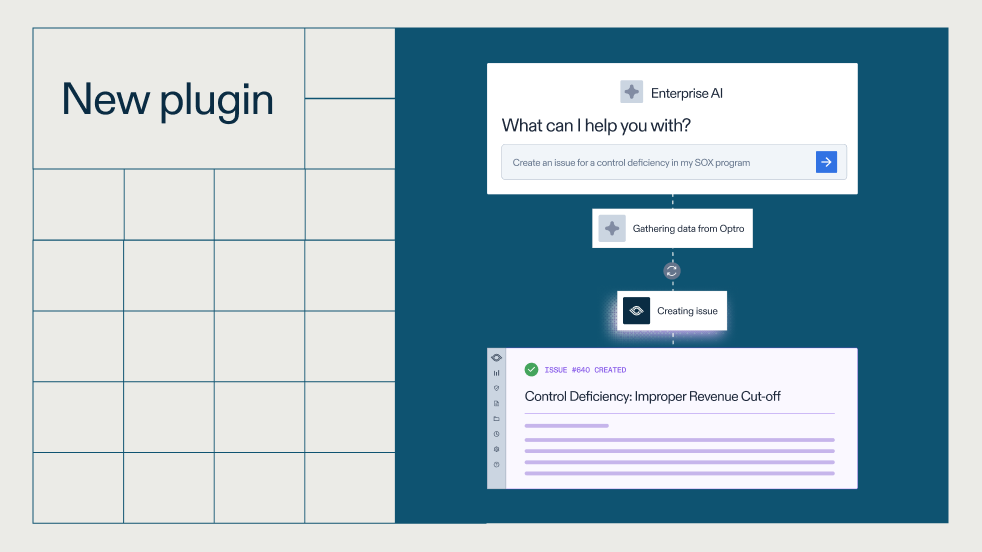
Manual governance is not a sustainable strategy for scaling AI. Automation platforms are essential for operationalizing your integrated framework. Solutions like Optro act as a central hub, connecting your policies to your AI systems and automating evidence collection and control monitoring. These tools can serve as a bridge between frameworks such as NIST and ISO, simplifying compliance management by automatically mapping controls and tracking risks in real time. By automating these processes, you reduce the potential for human error, create a single source of truth for your AI governance, and free up your team to focus on more strategic risk management tasks.
A successful integration requires a clear view of your progress. ISO 42001 requires you to establish a structured methodology for evaluating your AI governance maturity, which is incredibly helpful for this process. By establishing key performance indicators (KPIs) tied to your governance goals — such as the percentage of controls mapped, or the mitigation of identified risks — you can create a dashboard to monitor your progress. This approach not only keeps your team accountable but also demonstrates the value of your governance efforts to leadership and stakeholders.
Integrating any two frameworks comes with its own set of hurdles. But think of them less as roadblocks and more as signposts guiding you toward a more robust AI governance strategy. By anticipating these common challenges, you can create a clear path forward for your team and turn potential obstacles into opportunities for improvement.
At first glance, ISO 42001 and the NIST AI RMF can seem like they speak different languages. ISO 42001 provides an international standard for a structured, auditable AI management system, much like a detailed architectural blueprint. In contrast, the NIST AI RMF offers a more flexible, risk-based framework that helps you address context-specific challenges. The key is to see them as complementary. Use the NIST RMF’s adaptability to inform how you fulfill and implement ISO’s structured controls. This allows you to build a system that is both compliant and perfectly tailored to your organization’s unique AI landscape.
Every organization operates with finite resources of time, budget, and people. The thought of implementing two comprehensive frameworks can feel overwhelming, but you don’t have to tackle everything at once. This is where a risk-based approach becomes your greatest asset.
While ISO 42001 emphasizes global standardization, the NIST AI RMF provides the flexibility to prioritize your efforts. Start by using the NIST framework to identify and focus on your highest-risk AI systems. This strategy delivers immediate value, demonstrates progress to stakeholders, and allows you to manage your resources effectively as you build toward full ISO 42001 alignment.
A framework is only as strong as the people who use it. Introducing new processes can often be met with resistance or confusion, so getting your team on board is critical for success. The goal is to embed these practices into your company culture, not just check a box. To do this, you need a clear communication plan that explains the “why” behind the integration. Invest in training sessions that cover both ISO 42001 standards and NIST AI RMF risk management practices. When your teams understand how these frameworks help them build more reliable and ethical AI, adoption becomes a shared goal rather than a top-down mandate.
Integrating NIST AI RMF and ISO 42001 is about building a resilient and responsible AI governance structure. A successful implementation hinges on a few core practices that turn your strategy into a sustainable, everyday reality. By focusing on education, documentation, monitoring, and continuous improvement, you can create a framework that not only meets compliance standards but also builds trust and drives responsible AI use across your organization. These practices will help you get the most out of your integrated framework.
Your AI governance framework is only as strong as the people who use it. Before you can expect teams to follow new processes, you need to equip them with the right knowledge. Invest in comprehensive training that covers the principles of both ISO 42001 and the NIST AI RMF. This ensures everyone, from developers to risk managers, understands their roles and responsibilities. A well-designed AI training program creates a shared language and a unified approach to managing AI risks, making your implementation smoother and more effective from day one.
Clear and consistent documentation is the backbone of any compliance effort. It’s your proof of due diligence and the primary way you’ll demonstrate accountability. ISO 42001 provides a structured approach for this, helping you track your progress and assess your AI governance maturity. Establish clear standards for what to document, where to store it, and who is responsible for keeping it up to date. Doing this creates a reliable audit trail and makes it much easier to manage compliance activities as your AI portfolio and regulatory requirements evolve.
AI governance is not a set-it-and-forget-it activity. You need to regularly monitor your systems and processes to confirm they are performing as expected. The NIST AI RMF’s core functions — govern, map, measure, and manage — provide a great structure for ongoing oversight. By regularly assessing your performance against these functions, you can identify potential issues before they become major problems. This proactive approach allows you to maintain compliance, adapt to new risks, and continuously refine your AI risk management strategy, keeping your governance framework relevant and effective.
Think of your integrated framework as a living system that requires ongoing attention. The real value comes from combining the strengths of ISO 42001 and NIST AI RMF into a unified strategy that prioritizes learning and adaptation. Make continuous improvement a core principle of your AI governance program. Regularly review your processes, gather feedback from stakeholders, and look for opportunities to refine your approach. This commitment keeps your organization ahead of emerging risks and regulations.
After mapping and implementing your integrated framework, the final step is to measure whether it’s actually working. You need a clear, objective way to track your progress and demonstrate the value of your efforts to leadership. This process isn’t just about checking a box; it’s about confirming that your AI governance is stronger, your risks are lower, and your organization is better prepared for what’s next. A solid measurement strategy turns your hard work into tangible results.
First, you need to define what success for your overall AI governance program looks like in concrete terms. Your KPIs should be specific, measurable, and directly tied to your AI governance goals. Think about metrics that reflect maturity and efficiency. For example, you could track the percentage reduction in time to approve new AI models, the number of compliance gaps identified and closed per quarter, or a decrease in AI-related incidents. The goal is to move beyond subjective assessments and use hard data to prove your integrated system is performing as expected.
Your integrated framework should make your organization manage AI risks more effectively. To measure if this is actually working, you can use the core functions of the NIST AI Risk Management Framework — govern, map, measure, and manage — as a guide. Are you identifying risks more comprehensively during the mapping phase? Are your measurement and mitigation activities more effective?
Track metrics like the number of risks identified versus mitigated, the average time to resolve a high-priority risk, and the overall reduction in any overall AI risk score you may calculate. Effective risk management isn’t about eliminating all risk; it’s about understanding and controlling it. Your data should show a clear trend toward better control across the entire AI lifecycle.
Finally, you need reliable methods to verify your compliance. This area is where your integrated framework's structure truly shines. Because ISO 42001 promotes an auditable AI management system, you can conduct regular internal audits to check your controls and processes. You can also engage third-party auditors for independent validation, which adds significant credibility. Platforms like Optro simplify verification by automating evidence collection and control monitoring, making audits much smoother. By combining the auditable structure of ISO with the adaptive approach of NIST, you create a system that is both robust and ready for independent scrutiny.