

Internal Audit
Risk
CRX | October 13-15, 2026 | Up to 17 CPEs | In-person & virtual options available | Register Now!
June 23, 2026 • 11 min read
Richard Chambers
Internal audit is undergoing a transformation driven by AI, declining resources, evolving stakeholder expectations, and a volatile risk landscape in which risk expands exponentially. As I have written about frequently in the past year, these forces are fundamentally reshaping the work we do, and internal auditors have no choice but to evolve. Are you preparing your team to excel in our transformed profession?
Yesterday’s skills won’t ensure tomorrow’s success. Tomorrow’s internal auditors must strengthen their uniquely human superpowers while developing skills in AI, analytics, and IT audit. Talent strategies must identify how teams will acquire, develop, and retain these skills.
Most internal audit teams are still evolving their talent strategies to have the vision, flexibility, foresight, and organizational alignment necessary to navigate the AI era. Can we evolve fast enough to remain indispensable in the age of AI? I assure you we can, but forward-looking talent management strategies are essential. To anchor our thinking, we can articulate a vision of how specific AI capabilities will evolve our work and role, how we’ll maintain the “human edge,” and how talent strategies can respond.
What happens when AI assumes or expedites much of the work that has been internal audit’s historical bread-and-butter?
Indeed, agentic AI tools and agents will automate the heavy lifting of controls testing, evidence generation, and other repetitive tasks across planning, fieldwork, reporting, issue remediation, and beyond. AI is already helping organizations scale testing, increase its velocity, and reduce the administrative workload (e.g., Optro’s Midship-powered autonomous testing can automate up to 87% of SOX program management). What’s more, AI will automate sampling, evidence collection, document annotation, narrative/flowchart creation, and workpaper generation. AI-enabled risk sensing will help capture and interpret risk signals in real time, making continuous control monitoring and risk assessment a reality.
While AI can provide answers to questions, humans decide which questions matter. AI-enabled productivity increases will free up time, broadening our bandwidth to focus on more strategic work. We’ll bring our intellectual curiosity to the table to expand coverage, identify and pursue issues and opportunities outside the audit program, and deliver strategic analysis and foresight, becoming the trusted advisors we have long aspired to be.
Internal auditors cannot match AI’s speed and capacity. AI tools will detect patterns and anomalies across millions of transactions, rank risks based on statistical deviation, and more. AI agents are already capable of ingesting and interpreting unstructured data like human auditors would. AI-driven insights will help identify emerging risks and risk exposures, control weaknesses, and process improvement opportunities more quickly than traditional methods.
AI finds and surfaces information based on its training. Only humans can evaluate what it really means and communicate the nuances.
We bring the critical thinking lens, ethical judgment, empathy, and real-world experience needed to interpret AI’s outputs in context and communicate their meaning to stakeholders. We can recognize manipulation that may appear normal in the data, understand management’s intent and other key context, challenge AI’s rationalizations, consider alternatives, and distill it all into communications with the right tone, context, and level of urgency.
Every internal auditor appreciates help in improving cross-functional collaboration and communication. AI is no threat here, but rather a potential purveyor of powerful capabilities for integrating and analyzing data across teams, creating a common language, and enabling a more holistic view of risks, controls, and dependencies. AI agents will help orchestrate assurance, enabling more coordinated, collaborative, prioritized risk management.
AI cannot, however, “read” humans, build relationships, or establish genuine trust. Indeed, AI’s probabilistic models and people-pleasing tendencies are counterproductive to trust.
We bring the integrity, objectivity, judgment, ownership, and empathy needed to build and sustain trusted stakeholder relationships and layer in an understanding of human emotion, motivation, and organizational culture. So while AI provides an integrated system of action to support a more unified risk agenda, internal auditors provide the relationships, motivation, and commitment required to drive urgency and achieve results.
AI’s value is inextricably intertwined with the manifold risks it introduces related to data privacy, security, bias, regulatory compliance, model reliability, transparency, and accountability, all of which can significantly impact organizational decision-making and stakeholder trust.
AI can’t audit itself. Human internal auditors will always be needed to provide assurance over AI. We will play a critical role in providing independent assurance and advisory services over our organizations' AI use and governance. We are uniquely qualified to do this work given our independence, objective perspective, and risk, controls, process, and change management expertise.
What does this mean for the future of internal audit talent management? Teams will become more multidisciplinary, skilled in analytics, AI, cybersecurity, and behavior risk analysis. We will expand from assurers to advisors, and from value protectors to value creators. Accordingly, CAEs should:
In Optro’s 2026 Focus on the Future survey, 28% of internal audit leaders said that the profession risks becoming irrelevant to business strategy if it fails to adapt. We must adapt.
What must not change are the human superpowers that give us our edge. When I published Trusted Advisors in 2017, I identified nine key attributes of outstanding internal auditors: critical thinkers, technical expertise, dynamic communicators, insightful relationships, inspirational leaders, ethical resilience, results-focused, intellectually curious, and open-mindedness. From today’s vantage point, I’m increasingly confident that these attributes will remain constant amid the profession’s transformation. These are the very capabilities internal auditors bring to complement, elevate, and harness AI’s power.
CAEs should embrace these characteristics within themselves to develop and drive bold, forward-looking talent strategies that invest in the human edge. By conscientiously combining our human strengths with the power of AI, internal auditors will remain integral to organizational success.
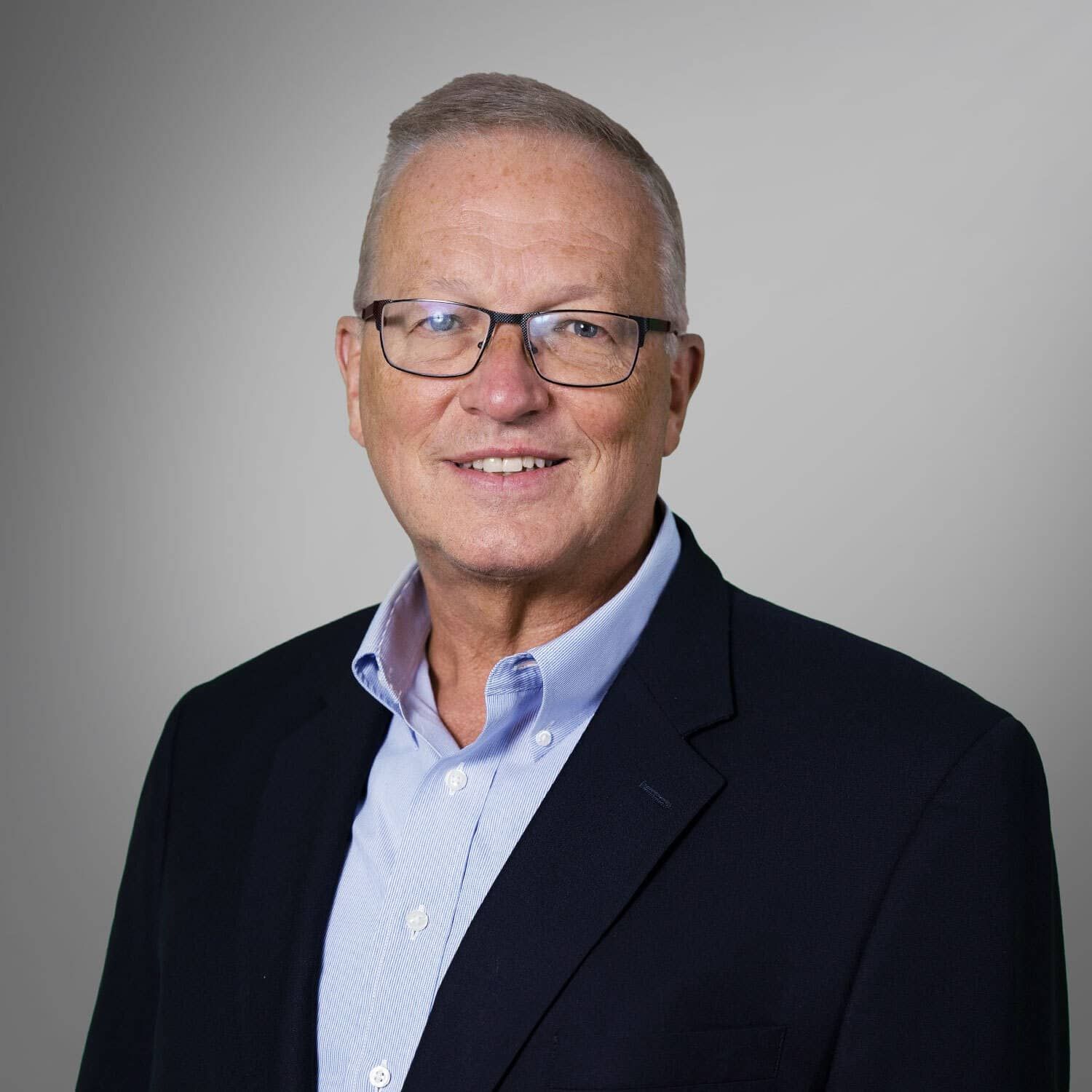
Richard Chambers, CIA, CRMA, CFE, CGAP, is the CEO of Richard F. Chambers & Associates, a global advisory firm for internal audit professionals, and also serves as Senior Advisor, Risk and Audit at Optro. Previously, he served for over a decade as the president and CEO of The Institute of Internal Auditors (IIA). Connect with Richard on LinkedIn.